
Video Game Development · Gaming Industry
Build Immersive Game Worlds With Better Systems
Immersive worlds do not become memorable because they are large. They become memorable because they make sense. When systems are believable, players stop noticing the scaffolding and start...
Immersive worlds do not become memorable because they are large. They become memorable because they make sense. When systems are believable, players stop noticing the scaffolding and start trusting the world. That trust is what turns a map into a place.
At MindMakerz, we keep coming back to the same principle: believability beats filler. A few reactive characters, clear rules, and spaces that shift with player choices will do more for immersion than a giant environment packed with empty content. The goal is not to overwhelm players with surface detail. The goal is to give them a world that responds.
Why systems matter more than size
Big worlds can look impressive in a pitch deck, but scale alone does not create depth. If the rules are unclear, the space feels decorative. If the characters never react, the world feels static. If player choices do not change anything meaningful, immersion starts to crack.
Believable systems solve that problem. They create consistency. They give players patterns to learn, test, and anticipate. That is where curiosity comes from. A world that behaves logically invites exploration because it feels alive, even when it is built with restraint.
Smarter production starts with sharper logic
For indie teams, this approach is not just better for immersion. It is better for production. Fewer assets, tighter logic, and more focused design all make development cleaner. Instead of stretching resources across a giant map filled with noise, teams can invest in the parts of the world that actually shape player experience.
That means fewer wasted hours on scenery that does not earn its place. It means more attention on the systems that players will notice every time they move, interact, or make a choice. In practice, this often leads to better polish, because the team is refining a smaller set of connected ideas rather than trying to make everything look important.
Design the rules first
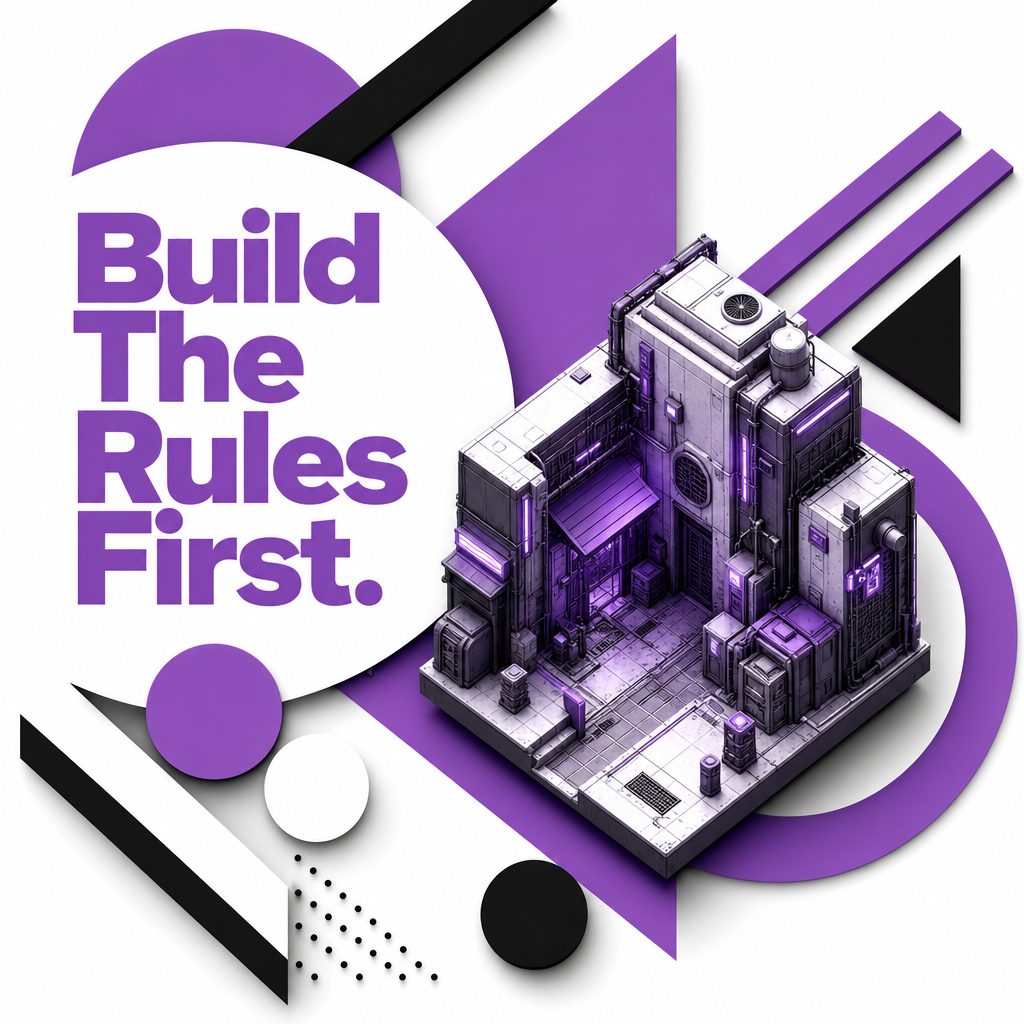
Our approach is simple: build the rules first, then make room for the player to breathe. When the logic is clear, the world can expand without losing its shape. Reactive characters, shifting spaces, and consistent responses all become easier to design when the underlying system is solid.
This is where immersive worldbuilding becomes a craft, not a content dump. The strongest spaces are not always the biggest. They are the ones that feel like they could keep going, because every part of them has a reason to exist.
At MindMakerz, we build worlds that invite curiosity, not expensive scenery. That means designing for interaction, consequence, and clarity from the start. It also means knowing when to stop adding and start sharpening.
For studios looking to create worlds that feel rich without becoming bloated, the question is worth repeating: what system is being sharpened right now? The answer often tells us more about immersion than the size of the map ever could. Learn more about how we think about world design at our game design approach.