
Video Game Development · Gaming Industry
How to Fix Repetitive Dungeon Loops in Game Design
A repetitive dungeon loop usually fails for one simple reason: the player keeps making the same decision with a new coat of paint. That is not a content problem so much as a design problem. If the...
A repetitive dungeon loop usually fails for one simple reason: the player keeps making the same decision with a new coat of paint. That is not a content problem so much as a design problem. If the player is solving the same situation over and over, the dungeon may look different, but it is not actually changing.
At MindMakerz, we treat dungeon pacing like a chain of decisions, not a chain of rooms. Each space should ask something slightly different from the player. Not every room needs a brand-new mechanic, but every repeat needs a new pressure point. That is how a loop stays sharp instead of turning into wallpaper.
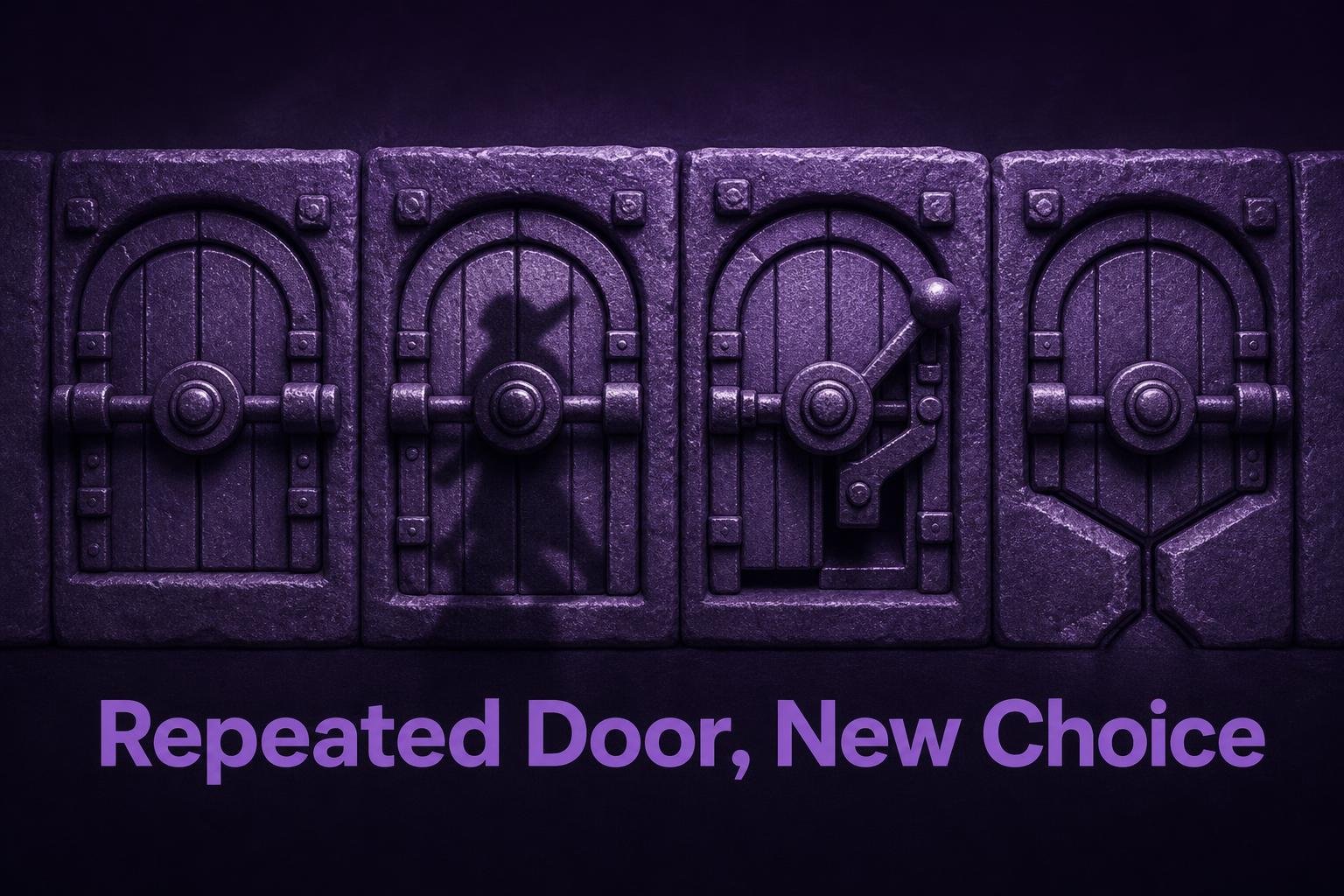
When a room repeats, the choice should not
If room one is “fight, take key, open door,” then room two cannot simply swap the enemy skin and call it progress. The player is still doing the same thing, with the same logic, for the same reward. What changes the experience is not the object itself, but the decision around it.
For example, the same key room can become a timing room when a patrol changes the safe route. The key is still there, but now the player must weigh speed against safety. That shifts the room from a basic task into a small tactical puzzle. The environment is no longer just a backdrop; it becomes part of the decision-making.
Pressure points create momentum
The best dungeon loops introduce one meaningful complication at a time. A key can become a lever. A lever can alter the path behind the player. A door can lead to two outcomes depending on whether the player moved quickly or explored first. Each repeat should add a rule, a risk, or a consequence.
This is where many indie dungeons lose momentum. The layout may be beautiful, the combat may be solid, but if the player is always making the same call, the brain stops reading the space as new. We want the player to feel the dungeon learning how to push back. That is what creates tension without bloating the system.
Designing for change, not just variation
There is a difference between variation and escalation. Variation changes the surface. Escalation changes the decision. A new enemy skin, a different color palette, or a rearranged corridor can help with readability, but they do not automatically deepen the loop. The real test is simple: what new choice exists here that did not exist two rooms ago?
If the answer is nothing, the loop is already repeating itself. That is the moment to step back and ask what the room is actually doing for the player. Is it creating urgency? Is it forcing a tradeoff? Is it changing the route, the timing, or the consequence of failure? Good dungeon design keeps asking those questions until the answer becomes clear in play.
Building encounters that stay alive
We build encounters so each repeat adds something the player must react to. That might be a new rule, a shifting risk, or a consequence that changes how the next room feels. The goal is not to overload the player with systems. The goal is to make every return to a familiar structure feel like a fresh read.
For indie teams and studio leads, this approach keeps dungeons from becoming mechanical loops that flatten out after the first few rooms. It also gives level design a stronger identity: the dungeon is not just a sequence of spaces, but a sequence of decisions that evolve.
If that is the kind of worldbuilding and encounter design your project needs, we talk about it often at MindMakerz. We also share more of our design thinking at our website, where we explore how immersive worlds stay engaging room after room.