
Video Game Development · Gaming Industry
Why NPC AI Breaks Before the World Does
The hardest part of game AI is not adding more behavior. It is finding the moment a character stops behaving like a character. For indie game developers and studio leads, that line matters because...
The hardest part of game AI is not adding more behavior. It is finding the moment a character stops behaving like a character.
For indie game developers and studio leads, that line matters because reactive NPCs are often the first system to reveal whether a world feels alive or merely assembled. When an NPC starts looping, becoming overly helpful, or breaking tone, the problem is usually not that the character needs more features. It is that the rules are too loose for the pressures we are asking them to handle.
Test the character before the content scales
One of the most useful ways to evaluate game AI is to push a single NPC through a few ugly cases before the rest of the content stack grows around it. We can learn a lot by testing the moments that feel inconvenient on purpose: the player repeats the same request, ignores the intended path, returns after a long gap, or triggers conflicting goals at once.
These edge cases are not distractions from the design. They are the design pressure test. If the character cannot stay coherent in small, messy situations, it will not become more stable once the world gets larger. The failure will just spread.
Reactive behavior is a system, not a script
That is why we treat reactive behavior like a small system instead of a line-by-line script. A narrow rule set gives the character a clear shape. It also makes the weak points easier to see. When memory is incomplete or wrong, we can observe whether the NPC stays consistent, contradicts itself, or starts bending into generic helpfulness.
The goal is not perfect intelligence. The goal is consistent behavior under pressure. That distinction matters in game design, especially when building immersive worlds where players expect characters to respond with some sense of identity, even when the situation gets weird.
When we approach NPC logic this way, we are not asking the system to solve everything at once. We are asking it to hold its tone, its intent, and its boundaries when the player does something unexpected. That is where character lives.
Where tuning problems show up first
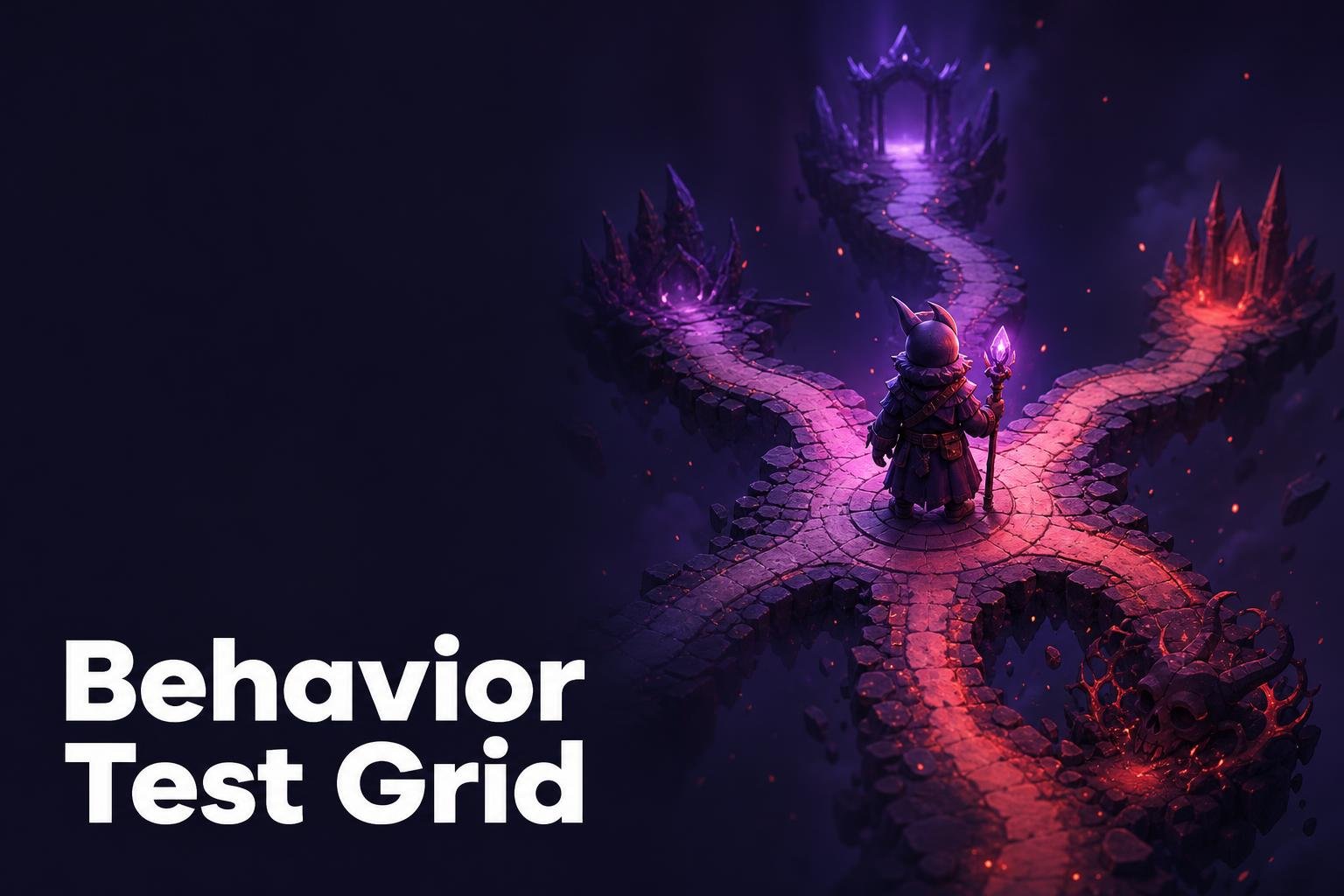
In our work with teams building reactive characters, the first test grid usually exposes the real tuning problems early. It is often the point where assumptions about memory, response rules, and conflict handling collide with actual player behavior. That early friction is useful. It tells us what needs tightening before the rest of the world depends on it.
For teams building immersive worlds, this kind of testing saves time later. It gives us a clearer read on whether the NPC is genuinely reactive or just appearing responsive until the player pushes it off the rails. And when we catch that early, we can keep the character grounded in its role instead of letting the system drift into noise.
If we want NPCs that feel believable, we have to start by asking a smaller question: what happens when the character is stressed, confused, or asked to do two things at once? That is where the true shape of the AI shows up.
If this is the kind of problem your team is working through, MindMakerz explores these systems with studios that want reactive characters to feel intentional from the start. Learn more at MindMakerz.
What edge case breaks your NPCs first? For more worldbuilding and game AI thinking from our team, visit our game design lab.